
Why UK business owners are relocating to the Cayman Islands
The pressure to leave the UK has only grown. On 6 April 2025 the government abolished the non-dom regime that had drawn internationally mobile founders to Britain, replacing it with a four-year limit on tax-free foreign income and gains. That followed a rise in capital gains tax to 24% and an increase in employers’ National Insurance to 15%, on top of a 25% headline corporation tax. For a business owner weighing where to build, the maths increasingly points offshore, and the Cayman Islands sit at the opposite end of the scale.
7,700km across the Atlantic Ocean, a politically stable island life awaits. One with renowned beaches, clear turquoise waters, stellar health care, a booming economy, and a solid infrastructure with a truly 0% taxation system. A place where 100% foreign company ownership is permitted, and a pro-business Government not only welcomes but encourages foreign direct investment.
The Cayman Islands may only be 1/1000 the size of the UK, but what it lacks in size, it makes up for in culture, culinary experiences, outdoor activities, and opportunities for genuine economic substance.
Feel Welcomed by “Caymankind”
Unlike other Caribbean nations, the Cayman Islands are highly welcoming to expats and their families. Expatriates account for over 50% of the Cayman Islands resident population and there is a strong community among neighbours and colleagues, regardless of nationality.
For those thinking of long-term residency, the Cayman Islands has a nine-year term limit, at which time you may apply for Permanent Residency or “rollover” by leaving for one year to reset your limit. There are no limits for expats on buying homes or cars and the housing market is very strong in Cayman, with development at an all-time high offering modern and contemporary waterfront living.
The people of Cayman truly embody the lifestyle of “Caymankind.” Whether it’s at the grocery store or driving through George Town, you will always find friendly faces and a willingness to help.
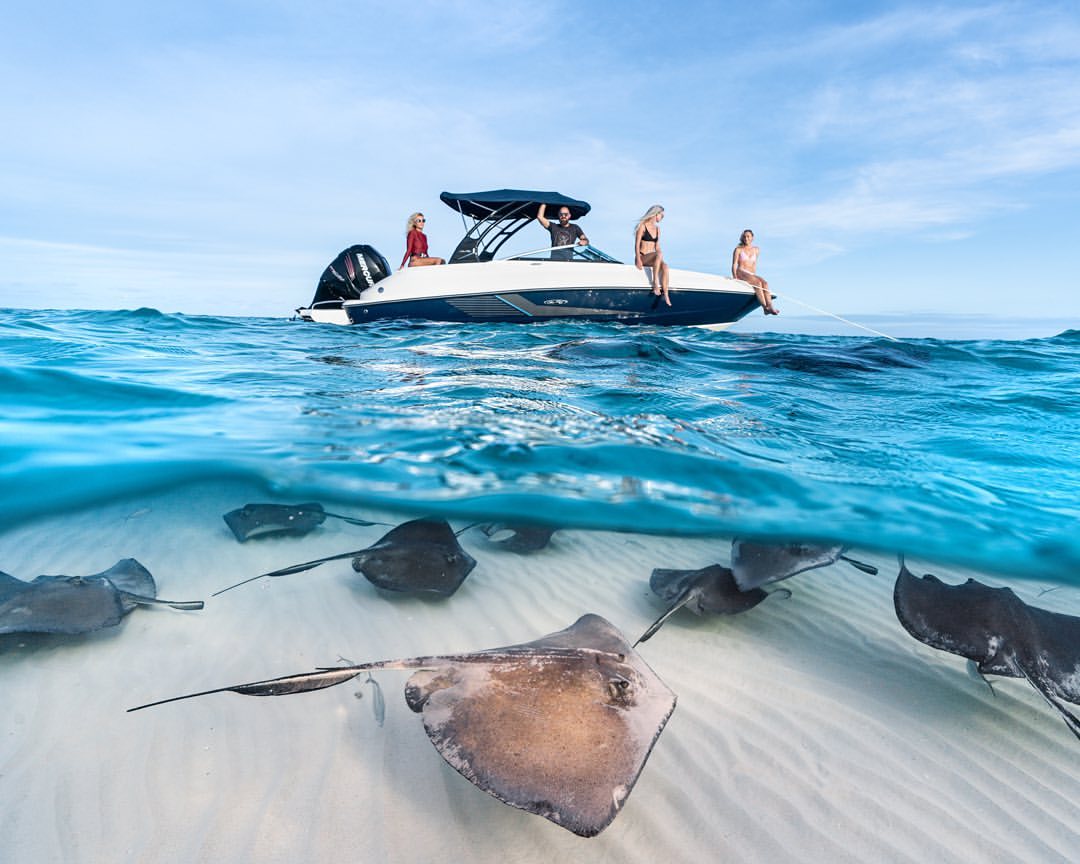
Near-perfect Weather All Year Round
The tropical climate of the Cayman Islands is a dream for the outdoorsman. With nearly two months less days of rain than the UK and an average daily temperature of 28°C, sunshine and warmth abound. Persistently spectacular weather means Cayman has an avid outdoor culture.
The Cayman Islands are consistently rated as one of the best places to go diving in the world, with the Bloody Wall in Little Cayman regularly ranked alongside places like the Great Barrier Reef. Cayman has an incredible dive culture, with over 250 dive sites across the three sister islands including the sunken ship the Kittiwake. With special resident rates, daily diving lessons and weekend dive clubs, you can be certified within the week of your arrival.
If exploring the underwater world of the Caribbean isn’t enough to pull you from rainy old England, perhaps one of the hundreds of fitness clubs, groups or activities can entice you. From team sports like Gaelic football and beach volleyball, to watersports like stand-up-paddleboard yoga and kayaking, getting active in the Caribbean has never been easier.
First Class Medical Care
The Cayman Islands provides a wide range of ultra-modern medical services, ranging from specialist clinics to large, sophisticated state-of-the art hospitals. There are three well-equipped, advanced hospitals in the Grand Cayman; two of these are privately-owned and one hospital is public. Read more about what medical care is like in the Cayman islands here.

The Culinary Capital of the Caribbean
There is no need for foodies to suffer while living in the Caribbean. The Cayman Islands have long been known as the culinary capital of the Caribbean. With are over 200 restaurants on Grand Cayman (nearly one per every square kilometer), you can find world-renowned restaurants dotting the Seven Mile strip inside luxury hotels or discover off-the-beaten-path hidden gems that only locals know of.
There are no fewer with 10 Wine Spectator ranked restaurants on Grand Cayman, with seven awarded the second-highest rating of “Best of Award of Excellence.” Established in 1908, Grand Old House is one of these highly rated restaurants, with an expansive deck overlooking the Caribbean Sea and a wine room offering more than 2,100 selections and 25,000 bottles.
Inside the Ritz Carlton is the acclaimed Blue by Eric Ripert, serving exquisite local seafood elevated to the sublime and is the Caribbean’s only AAA Five Diamond dining experience. Chef Ripert and the Ritz Carlton also host the widely celebrated “Cayman Cookout” event, where the world’s most talented chefs, culinary influencers and wine and spirit experts gather every January to cook, serve and sample their latest skills to attendees.

Strong Legal Environment
If lifestyle is the least of your business concerns, consider the Cayman’s legal environment. The Cayman Island’s government has made it easier than ever before to set up a genuine physical presence thanks to the Cayman Enterprise City (CEC) special economic zones. Very much unlike the United Kingdom, the Cayman Islands is completely tax free, including 0% payroll, corporate, capital gains, or income tax, greatly easing the financial burden on your business. A tax-free income and Caribbean island living also entices top talent to your company.
As a British Overseas Territory, the Cayman Islands is governed by a democratically elected Parliament. The country has a stable political system and its legal and court system is based on English Common Law. Businesses and entrepreneurs can operate with assurances that their assets are protected.
Ease of Relocation
Relocating your business and your family to the Cayman Islands has never been easier thanks to competitive concessions offered by CEC. Whether your business is involved in maritime or aviation operations, media or science and technology, or a host of other industries, CEC can ensure your relocation to the Cayman Islands is taken care of with accelerated set up and personalised service.
From setting up your business, acquiring work permits, and assisting with housing, CEC can have your company fully established in the Cayman Islands in just 4-6 weeks. There is no minimum capital investment required, and thanks to turnkey business packages, CEC can streamline your business process with no bureaucratic red tape.
How to move your business to the Cayman Islands from the UK
There are two main routes, depending on whether you are relocating a business or relocating yourself.
The business route runs through Cayman Enterprise City’s Global Corporate Citizen Programme. You establish a Cayman Islands special economic zone company with 100% foreign ownership, and that company sponsors renewable work and residency visas, issued for five years and renewable for a further four. There is no minimum capital requirement, and most companies are fully established within four to six weeks. After eight years of residency, you can apply for permanent residency.
The independent route suits those moving without an operating business. A Residency Certificate for Persons of Independent Means requires an investment of at least CI$1 million, including CI$500,000 in developed real estate, plus evidence of annual income. A larger investment of CI$2 million in developed real estate qualifies for permanent residence.
British citizens do not receive automatic residency despite the islands’ status as a British Overseas Territory, but the process is well-trodden and, for business owners, largely handled by Cayman Enterprise City.
UK versus Cayman: the tax difference
The gap is stark. A UK business owner can face income tax of up to 45%, capital gains tax at 24%, employers’ National Insurance at 15%, and corporation tax at 25%. In the Cayman Islands, each of those is zero.
There is no income tax, no corporation tax, no capital gains tax, no payroll tax, and no withholding tax. The islands fund themselves through duties and fees rather than direct taxation, which is the foundation of Cayman’s tax-neutral status. For a founder taking profits out of a growing company, that difference compounds year after year.
What it costs to move from the UK
The Cayman Islands are not a cheap place to live. Most goods are imported, and Grand Cayman’s cost of living runs well above the UK average, particularly for housing near Seven Mile Beach. The offset is that nothing is taxed: a salary or dividend that would lose 40% or more to HMRC arrives intact.
The direct costs of relocating a business through Cayman Enterprise City are the annual licence and work-permit fees built into its packages, with no minimum capital investment. Housing, schooling, and shipping are the main personal costs, and most families budget for a settling-in period of a few months.

If you’d like to hear from our clients – people who have made the move to the Cayman Islands – get in touch with us today. We have over 300 businesses within Cayman Enterprise City who are incredibly diverse in industry and size that we can put you in touch with as we consult with you on your needs.
Frequently asked questions
Can UK citizens move to the Cayman Islands?
Yes. British citizens can relocate to the Cayman Islands, though residency is not automatic. Most move through an employer or by setting up a business with Cayman Enterprise City, which sponsors renewable work and residency visas. Investors can also qualify through a Residency Certificate.
Do I need a visa to move to the Cayman Islands from the UK?
Yes. To live and work in the Cayman Islands you need a work permit or a residency certificate. UK passport holders can visit without a visa, but working or settling requires sponsorship through an employer, a business, or an independent-means application.
How much does it cost to move to the Cayman Islands from the UK?
There is no minimum capital requirement to relocate a business through Cayman Enterprise City. The main costs are annual licence and work-permit fees, plus personal costs like housing and shipping. The cost of living is high, but the absence of income tax offsets it substantially.
Is the Cayman Islands still British?
Yes. The Cayman Islands is a British Overseas Territory with its own elected Parliament and a legal system based on English common law, while the UK retains responsibility for defence and foreign affairs. British citizens do not gain automatic residency rights.
How long can UK citizens stay in the Cayman Islands?
Standard work permits run up to nine years, after which residents can apply for permanent residency. Cayman Enterprise City’s visas are issued for five years and renewable for four, with permanent residency available after eight years of continuous residence.
Can I get a job in the Cayman Islands as a UK citizen?
Yes. UK citizens work across Cayman’s finance, technology, law, and tourism sectors, and a local employer sponsors the work permit. Open roles are listed on the Cayman jobs portal.