.png?width=900&name=HERO%20Website%20Image%20TEMPLATE%20(88).png)
Top benefits of buying a real estate property in the Cayman Islands.
- No annual property or Capital Gains taxes
- High Return on Investment (ROI)
- Economic growth and high demand
- Diverse selection of properties
Read below to learn more.
“The real estate market in the Cayman Islands is robust, providing a fantastic opportunity for international investors or people who are taking advantage of the excellent CEC working regulations in the Cayman Islands. From a buyer's perspective, property in the Cayman Islands is built to code, with high-quality finishes as standard – coupled with a perfect combination of a government that is stable politically and infrastructure that is region-leading.” Kerri Kanuga, Trident Properties Broker.
The Cayman Islands property market entered 2026 from a position of record strength. Government property stamp duty receipts reached a record CI$130.3 million in 2025, the highest total ever recorded and 23% above 2024. Uche Obi, Director of Lands and Survey, described the figure as a testament to the enduring confidence in the Cayman Islands real estate market. Demand has held up through global interest rate rises, concentrated in condominiums, luxury developments, and the Seven Mile Beach corridor, in a jurisdiction that still offers one of the Caribbean’s highest standards of living.
Cayman remains a safe haven for investments and has fared remarkably well in an otherwise turbulent year. So, what does this mean for you? Will finding a slice of paradise to call home be more advantageous than you think?
Possibly, at least for the foreseeable future.
Cayman Enterprise City (CEC) has outlined the top benefits of buying a real estate property in the Cayman Islands.
.png?width=740&name=Community%20Website%20Image%20TEMPLATE%20(4).png)
The Perks of Buying Property in the Cayman Islands
1. Perks of buying property in Cayman Islands: there's no annual property or Capital Gains Taxes
There are no restrictions on foreign ownership if the property is for personal use. In addition to this, there is no annual property or capital gains tax if the property is rented out as an investment, and no tourist tax applicable if the property is rented to residents of the Cayman Islands. “Staycations” have become an increasingly lucrative market since March of last year as residents continue to avoid international travel.
This attractive investment opportunity sets Cayman apart from any other property investment opportunities around the world. Rental property enquiries saw an increase as use for vacation homes as some flocked to the Cayman Islands for a more idyllic backdrop to the pandemic.
Beachfront properties saw an increase in occupancy by long-term tenants that would normally be snapped-up by tourists. As tourism recovers, however, we will likely see a change back to short-term rentals due to a gradual influx of seasonal visitors.

2. Perk of buying real estate in Cayman Islands: the high ‘Return on Investment’ (ROI)
The current ROI in the Cayman Islands is still high and its real estate as a whole is a stable investment which has seen very little fluctuation over the past 2 decades. Even during the lockdown, record sales prices in various sectors were seen and commercial units alone saw a 1170% increase in 2020 compared to 2019 which speaks to the confidence of the market.
Land is still a competitive opportunity as it is expected to yield high ROI once the global situation normalises and tourists return. Plus, a strong staycation market has offered excellent opportunities for landlord investors.
The profit a property owner will take tends to be much higher than the cash invested into a property. As an example, a current two-bedroom flat ranges from around $1,600 to $2,800 CI a month and these steep rent prices around the Island have not changed, even during COVID-19.
With the property market still growing, a stable ROI makes for a highly attractive real estate investment.
3. Perk of buying in Cayman Islands: the economic growth and high demand
According to the Cayman Compass, Cayman Resident and Property Cayman, the demand for property in the Cayman Islands is likely to continue growing, especially for luxury and modern real estate.
In 2020 and 2021, Cayman experienced record-setting demand and in turn, sales. Local hoteliers and others in the tourism sector expect this high season (the first without COVID-related travel restrictions or protocols) to be booming. They say rooms are being booked at pre-pandemic levels and furthermore, at higher rates. This is good for both the local economy as well as for investors interested in Cayman’s real estate market.
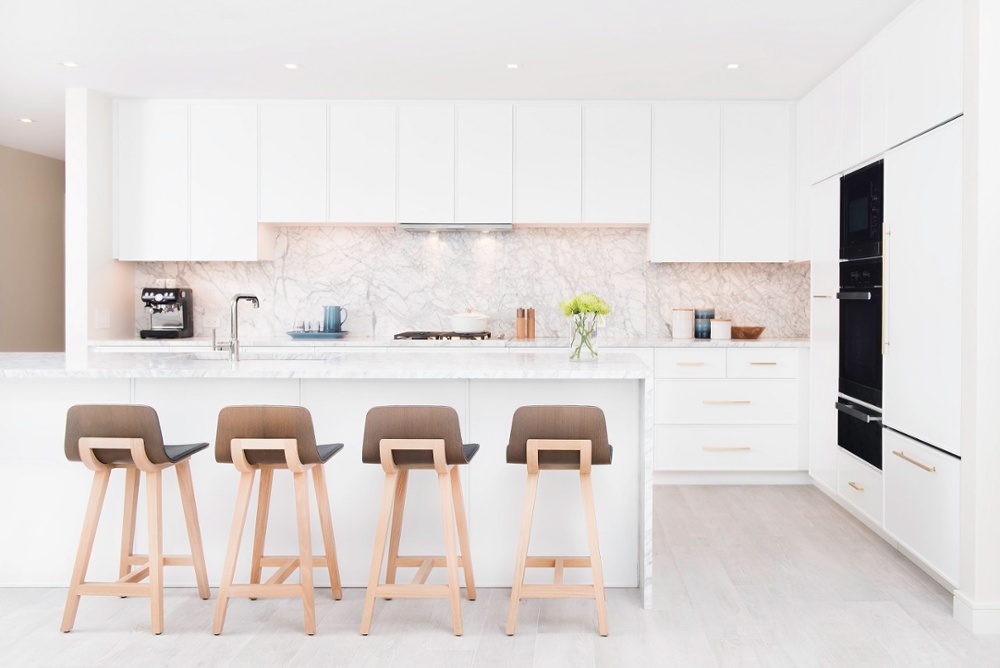
Single-family homes saw fewer sales, but the condominiums and apartments markets remain strong as ever, taking up the majority of sales. There are currently more than CI$1.4 billion in new properties in development, with an increasing interest in the luxury real estate segment. This is good news to all current and new property buyers. New developments are positively impacting existing property values and are expected to continue. As a result, real estate locations such as Prospect and Bodden Town have seen an increase in new developments and infrastructures.
4. Perk of buying property in Grand Cayman: there's a diverse selection of properties
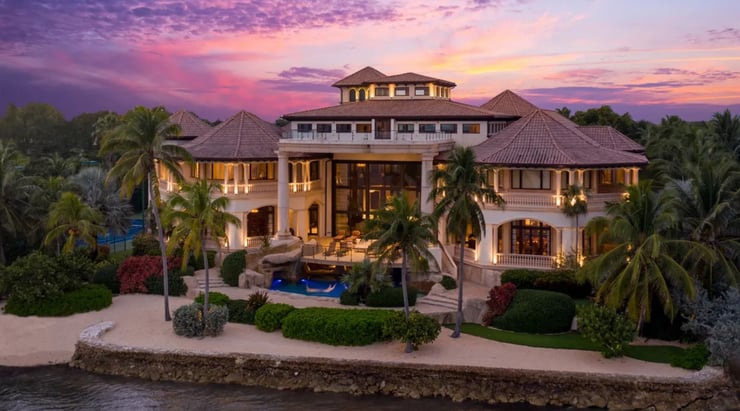
There is certainly a wide selection of properties available in Cayman— from high-end luxury offerings to those on the more affordable end. Luxury, executive and small family homes with a true island feel can be found in West Bay, one of Cayman’s older residential areas. Seven Mile Beach is the most sought-after location on Grand Cayman where you can find a mix of villas and condos along a beautiful sandy beach, mostly used for vacation rentals. However, just a ten-minute drive to the south you’ll find the South Sound and Prospect neighbourhoods which offer larger waterfront properties and family homes.
There are plenty of vacant land opportunities to build a home from scratch in and around Diamond’s Edge, The Shores, and areas within South Sound. Or you can take advantage of several luxury multi-unit developments poised to offer high ROI including Watermark, One Canal Point, OLEA and Lacovia. Spotts/Red Bay is also a fast-growing area with private docks and waterfront homes, whilst Bodden Town, being Grand Cayman’s first settlement, is rich in history. A quaint island ambience in a mix of old and new style homes with ample land parcels is a great place to settle.
With a wide range of property options there is also an array of Real Estate companies. An abundance of local professionals are ready to assist you on the road to a new home! For the widest selection of properties for sale in the Cayman Islands, take a look at CIREBA, Cayman’s only MLS (multi-listing service).
Can foreigners buy property in the Cayman Islands?
Yes, and with fewer restrictions than almost anywhere else. The Cayman Islands place no limits on foreign ownership of property. Non-residents can hold freehold title in their own name, and that title is granted and guaranteed by the Cayman Islands Government, which removes the title uncertainty found in many other markets.
There is no requirement to hold residency, a work permit, or a local company before buying. Foreign buyers purchase on the same terms as Caymanians, whether the property is a Seven Mile Beach condo, a family home in South Sound, or vacant land to build on.
The practical starting point is the local market itself. Cayman operates a single shared multi-listing system through CIREBA, so a member agent can give access to essentially every property for sale across the three islands.
What you pay: stamp duty, and no annual property tax
Cayman charges no annual property tax, no capital gains tax, and no income tax, which sits at the heart of the islands’ tax-neutral status. For an owner, rental income and any gain on resale are not taxed locally.
The main government charge is a one-time stamp duty, paid once at completion. The standard rate is 7.5% of the purchase price or market value. From 1 January 2026, properties valued at CI$2 million or more are charged 10%, a change the Cayman Islands Government legislated in late 2025.
There are no recurring property taxes after that. The absence of annual holding costs is a large part of why net rental yields in Cayman compare well with higher-tax markets, even where purchase prices are high.
Buying property as a route to residency
Property in Cayman can do more than generate a return. Above certain thresholds, a real estate investment qualifies the buyer for Cayman Islands residency.
The entry route is the Residency Certificate for Persons of Independent Means. It requires an investment of at least CI$1 million (US$1.2 million) in Grand Cayman, of which at least CI$500,000 must be in developed real estate, plus proof of a continuous annual income of CI$120,000. The certificate runs for 25 years and, on its own, does not permit working locally.
Buyers investing at a higher level can apply for the Certificate of Permanent Residence for Persons of Independent Means, which requires CI$2 million (US$2.4 million) in developed real estate. It grants the right to live in Cayman permanently, can be varied to allow employment, and opens a path toward naturalisation and, eventually, belonger status. It is the closest thing Cayman has to residency through real estate.
For those relocating to run a business rather than to retire, buying a home often sits alongside setting up a special economic zone company through Cayman Enterprise City, which carries its own fast-tracked work and residency permissions. Property and business setup are frequently handled together as a single move to Cayman.
How to buy property in the Cayman Islands
The purchase process is straightforward and usually takes four to eight weeks from accepted offer to completion.
- Engage a CIREBA member agent. Cayman uses one shared listing system, so a single agent can show you the full market.
- Make an offer. Once agreed, the terms go into a purchase agreement, typically with a deposit of around 10% held in escrow.
- Instruct a local attorney. Your lawyer runs the title search against the government Land Registry and handles conveyancing.
- Pay stamp duty. The one-time duty of 7.5%, or 10% above CI$2 million, falls due at completion.
- Register the title. Ownership is recorded with the Cayman Islands Government, which guarantees the title.
- Arrange insurance. Lenders require property and, usually, hurricane coverage, and most cash buyers carry it too.
No residency or nationality requirement applies at any stage.
The content of this article is intended to provide a general guide to the subject matter. Specialist advice should be sought regarding your specific circumstances.
CEC is home to hundreds of innovative global businesses and makes establishing a physical presence in the Cayman Islands easy. Ready to Make the Move? We are here to help you turn your island vacation into a permanent stay! Get in touch with CEC today and we can talk you through your options for setting up a special economic zone business.

Frequently asked questions
Does the Cayman Islands have property tax?
No. There is no annual property tax, no capital gains tax, and no income tax. The only government charge on a purchase is a one-time stamp duty of 7.5% of value, rising to 10% on properties worth CI$2 million or more from January 2026.
Can foreigners buy property in the Cayman Islands?
Yes. There are no restrictions on foreign ownership. Non-residents can hold freehold title in their own name, guaranteed by the Cayman Islands Government, and no residency or work permit is required to buy.
How much is stamp duty on Cayman Islands property?
Stamp duty is a one-time charge of 7.5% of the purchase price or market value. From 1 January 2026, properties valued at CI$2 million or more are charged 10%. It is paid at completion, with no recurring property tax afterward.
Can buying property lead to residency in the Cayman Islands?
Yes. An investment of at least CI$1 million, including CI$500,000 in developed real estate, qualifies for a 25-year Residency Certificate. CI$2 million in developed real estate qualifies for permanent residence, which can be varied to allow employment.
What is the average property price in the Cayman Islands?
Prices vary widely by location and type, from apartments under US$500,000 to Seven Mile Beach and luxury homes well above US$2 million. The 2025 market average sat near US$1.2 million, with condominiums making up most sales.
Do I need to live in the Cayman Islands to buy property?
No. You can buy as a non-resident and use the property as a home, a rental, or an investment. Many owners buy first and pursue residency later, since qualifying real estate can count toward a residency application.