
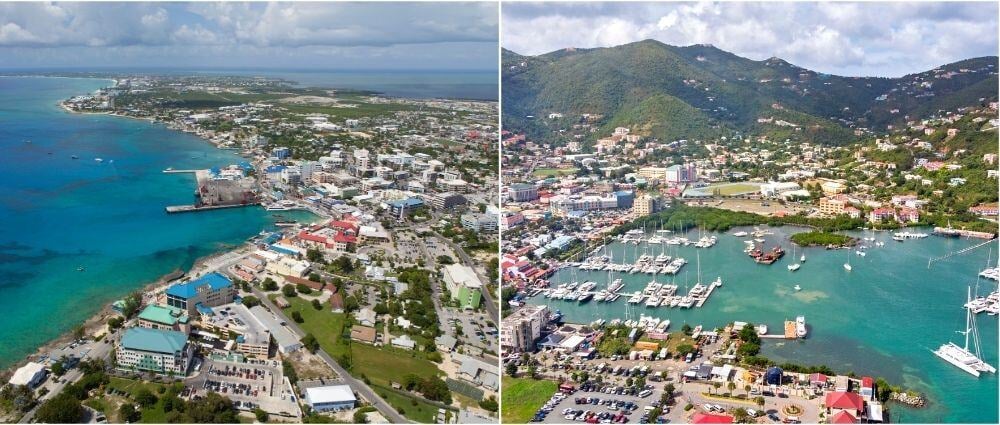
With their stunning landscapes and favourable business climates, the Caribbean islands of the Cayman Islands and the British Virgin Islands (BVI) are popular among entrepreneurs globally. Together, these two British Overseas Territories dominate the offshore company formation market, with the BVI hosting approximately 40% of the world's offshore companies and the Cayman Islands serving as the global leader for hedge funds and investment vehicles. We delve into the specifics to assess which destination might be the ideal fit for establishing an offshore business, with a particular focus on the advantages offered by the Cayman Islands.
Quick Decision Framework
Before examining the detailed comparison, here's a quick guide to help you identify which jurisdiction aligns with your business needs:
Choose the Cayman Islands if you:
- Are launching a hedge fund, private equity fund, or institutional investment vehicle
- Plan to list on the Hong Kong Stock Exchange or pursue an IPO
- Operate in crypto, blockchain, or virtual assets and want a dedicated SEZ
- Want a comprehensive, turnkey setup with office space and banking included
- Value access to Big Four accounting firms and top-tier legal providers
- Plan to relocate and want the highest standard of living in the Caribbean
Choose the British Virgin Islands if you:
- Need a simple holding company structure with minimal ongoing costs
- Prioritise rapid, low-cost incorporation (basic registration under $2,000)
- Are comfortable managing compliance requirements independently
- Have investors primarily from Russia or Asia familiar with BVI structures
- Need a pure equity holding company with reduced substance requirements
Cayman Islands vs. BVI: Offshore Business Showdown
|
Criteria |
Cayman Islands (CEC) |
British Virgin Islands (BVI) |
|
Time to Set Up |
4-6 weeks (turnkey) |
3-6 days basic; 3+ months fully operational |
|
Setup Cost |
From USD $14,750 (all-inclusive) |
USD $1,500-2,500 basic incorporation |
|
Annual Fees |
Higher (comprehensive support) |
$350-$1,700 (plus compliance costs) |
|
Corporate Tax |
0% |
0% |
|
Special Economic Zones |
Yes - 4 dedicated zones |
No |
|
Hedge Fund Jurisdiction |
#1 globally (~75% offshore funds) |
#2 globally (~25% offshore funds) |
|
IPO/Listing Preference |
60%+ of HKEX listings |
Minimal listing |
|
Economic Substance |
SEZ provides compliance solution |
Complex requirements since 2019 |
|
Flight Connections |
29 destinations, 10 airlines |
15 destinations |
|
Population |
65,483 (130+ nationalities) |
30,231 |
Taxation
The Cayman Islands offer a tax-free haven with no corporate, capital gains, or sales taxes, making it an appealing destination for fiscal efficiency. Conversely, the BVI attracts businesses with its zero corporate tax rates and absence of capital gains tax, complemented by a straightforward regulatory framework.
|
Tax Type |
Cayman Islands (CEC) |
British Virgin Islands (BVI) |
|
Corporate Tax |
0% |
0% |
|
Personal Income Tax |
0% |
0% |
|
Capital Gains Tax |
0% |
0% |
|
Sales Tax/VAT |
0% |
0% |
|
Withholding Tax |
0% |
0% on dividends |
|
Payroll Tax |
0% |
8% Social Security |
|
Stamp Duty |
Minimal |
Lower than Cayman |
|
Double Taxation Treaties |
None; uses Tax Information Exchange Agreements (TIEA) |
Limited network; uses Tax Information Exchange Agreements (TIEA) |
While both jurisdictions offer 0% corporate tax, it's important to note that business owners remain subject to tax obligations in their country of residence. The tax-neutral status applies to income generated through the offshore entity, not personal worldwide income. Both jurisdictions comply with international tax transparency standards including FATCA and CRS.
Investment Funds: Hedge Funds and Private Equity
For investment fund formation, the Cayman Islands and BVI are the two dominant offshore jurisdictions globally, but serve different segments of the market.
Cayman Islands: The Global Leader
- Home to approximately 75% of global offshore hedge funds
- Over 12,900 mutual funds and 17,300 private funds registered (as of March 2025)
- 50% market share for crypto hedge funds
- Regulated by Cayman Islands Monetary Authority (CIMA)
- Preferred by US, Western European, and Latin American institutional investors
British Virgin Islands: Cost-Effective Alternative
- Approximately 25% of offshore hedge funds globally
- 866 Professional Funds and 2,139 active mutual funds (as of 2024)
- 13% market share for crypto funds
- Lower setup and ongoing costs than Cayman
- Popular among Asian and Russian investors, niche strategies, and emerging managers
IPO and Stock Exchange Listings
For companies planning to pursue an IPO or stock exchange listing, jurisdiction choice is critical. The Cayman Islands dominates this space:
- Over 60% of companies listed on Hong Kong Stock Exchange main board are Cayman-incorporated
- SPACs (Special Purpose Acquisition Companies) predominantly use Cayman structures
- US ADR (American Depositary Receipt) programmes commonly use Cayman holding companies
- BVI has minimal presence in the listed company space
If you're building a company with future IPO aspirations, particularly for Asian markets, the Cayman Islands provides the established infrastructure and investor familiarity that institutional investors expect.
Time to Set Up a Business
While the initial company registration in the BVI can be completed within 3-6 business days, establishing a fully functional business takes significantly longer. Opening a bank account, which is crucial for business operations, can take up to three months due to strict banking regulations and KYC requirements. Additionally, securing necessary licences for certain business activities, such as financial services, can take 4-6 weeks. In contrast, Cayman Enterprise City (CEC) offers a comprehensive, white-glove service that integrates seamlessly with local government processes, ensuring that all aspects of your business are operational within 4-6 weeks, including company registration, office space, and banking setup.
Realistic Timeline Comparison:
|
Milestone |
Cayman (via CEC) |
BVI (Independent) |
|
Company Registration |
Included in 4-6 weeks |
3-6 business days |
|
Bank Account Opening |
Included in 4-6 weeks |
1-3 months additional |
|
Office Space |
Included in package |
Must arrange separately |
|
Work Permits |
Streamlined through SEZ |
Standard process |
|
Fully Operational |
4-6 weeks total |
3-4 months total |
Cost to Establish a Physical Presence
Operating a business in the BVI can involve hidden costs that are not immediately apparent during the initial setup. For example, economic substance regulations require a physical office and local staff, which can add an estimated $5,000 per month in costs. Additionally, office rentals, utility costs, and expatriate staff expenses are significantly higher than in other jurisdictions. Navigating these requirements independently can be burdensome and time-consuming. In contrast, CEC in the Cayman Islands provides an all-inclusive package that covers these needs, reducing the risk of unexpected expenses and administrative burdens.
True Cost Comparison (First Year):
|
Cost Item |
Cayman (via CEC) |
BVI (Independent) |
|
Basic Incorporation |
Included |
$1,500 - $2,500 |
|
Registered Agent |
Included |
$1,000 - $2,000/year |
|
Government Fees |
Included |
$350 - $1,100/year |
|
Office Space |
Included |
$2,000 - $5,000/month |
|
ES Compliance |
SEZ handles |
$5,000 - $40,000/year |
|
Bank Setup |
Included |
$1,000 - $3,000 |
|
First Year Total |
From $14,750 |
$15,000 - $100,000+ |
Economic Substance Requirements: A Critical Consideration
Since 2019, both jurisdictions have implemented Economic Substance (ES) requirements in response to OECD and EU regulations. However, the practical implications differ significantly:
British Virgin Islands Economic Substance Requirements:
- Applies to 9 categories of 'relevant activities' including holding company business, IP, and distribution
- Requires demonstrating adequate employees, premises, and expenditure in the BVI
- Annual ES reports mandatory within 6 months of financial year end
- New 2025 requirements: Annual Financial Returns now mandatory for all companies
- Penalties for non-compliance: $5,000-$400,000 and potential strike-off
- Pure equity holding companies have reduced requirements but still must file
Cayman Islands Approach:
- Similar ES framework exists for Cayman companies
- However, CEC Special Economic Zone companies have a streamlined compliance pathway
- SEZ provides built-in substance through office space, local presence, and community
- CEC handles compliance obligations as part of the membership package
Intellectual Property and Legal Framework
Both jurisdictions uphold British Common Law, ensuring robust protection for your business's intellectual property. They both permit 100% foreign ownership with Cayman Islands' law adding familiarity for those used to British legal systems.
Both jurisdictions allow final appeals to the Judicial Committee of the Privy Council in London, providing an additional layer of legal certainty. The Cayman Islands has a dedicated Financial Services Division within its courts, offering specialised expertise for complex commercial disputes. The BVI established a Commercial Court in 2009 with a strong reputation for efficient handling of high-value disputes.
Ease of Doing Business
The BVI's stringent economic substance regulations, introduced in recent years, have added layers of bureaucracy, making it harder for businesses to comply without extensive local knowledge. Non-compliance can lead to fines or even the liquidation of the business. CEC's integrated approach in the Cayman Islands ensures that all regulatory requirements are met efficiently, with minimal hassle for business owners.
Ease of Travel
The Cayman Islands are noted for their exceptional connectivity to major American cities, providing a significant advantage for businesses with international operations. The BVI also offers good connectivity, but with fewer direct flights and destinations.
Cayman offers direct flights to Los Angeles, Miami, New York, Toronto, and London from Owen Roberts International Airport. The BVI's Terrance B. Lettsome International Airport primarily serves regional connections, with most international travellers connecting through San Juan, Puerto Rico or St. Thomas, USVI.
Island Demographics and Business Community Dynamics
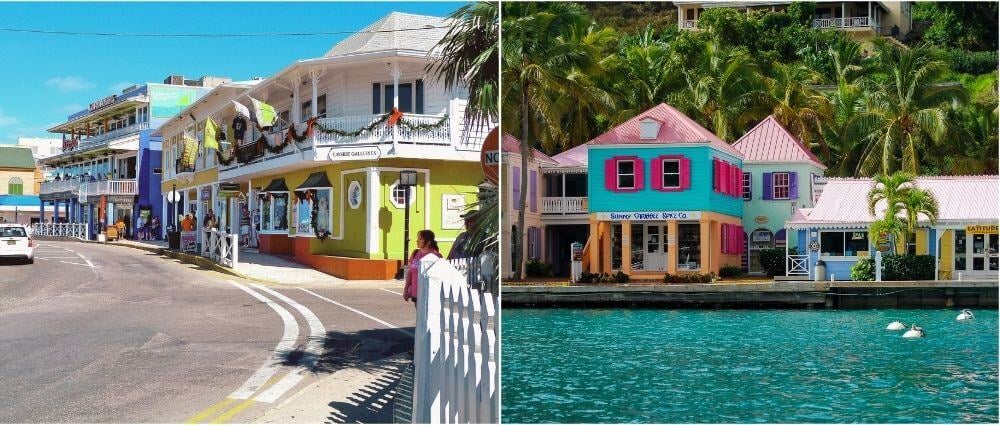
The Cayman Islands, with over 65,483 residents, feature a global mix of over 130 nationalities, enriching a vibrant business community ideal for international networking and enterprises. The BVI, with a smaller population of 30,231, offers a close-knit community with strong networking opportunities but less diversity.
Special Economic Zones and Investment Incentives
The Cayman Islands stand out with Special Economic Zones (SEZs) offering significant tax relief and operational benefits, providing a unique advantage not available in the BVI. The BVI offers robust incentives under the Business Companies Act but lacks the specialised benefits of SEZs.
Cayman Enterprise City Zones:
• Cayman Tech City – Technology, software, AI, and blockchain companies
• Cayman Commodities & Derivatives City – Trading and commodities firms
• Cayman Maritime & Aviation City – Shipping and aviation businesses
• Cayman Media City – Media, marketing, and creative industries
Cryptocurrency and Virtual Asset Businesses
For blockchain, crypto, and Web3 companies, the Cayman Islands has emerged as the clear leader. The jurisdiction hosts major protocols including Chainlink, Avalanche, Ledn, Aave, and MakerDAO. Cayman Tech City provides a dedicated environment specifically designed for virtual asset companies.
The BVI also welcomes crypto businesses and holds approximately 13% of the crypto hedge fund market, making it a viable alternative for cost-conscious operators. However, the Cayman Islands' established crypto ecosystem, industry associations (Digital Cayman, CIVAS), and regulatory clarity make it the preferred choice for serious virtual asset ventures.
Lifestyle
In the Cayman Islands, residents enjoy a luxurious lifestyle complete with top-tier amenities, healthcare, education, and leisure activities like beach outings and water sports. The BVI offers a relaxed island lifestyle with excellent healthcare and education, but may not match the cosmopolitan flair of the Cayman Islands.
The Cayman Islands consistently ranks as having the highest standard of living in the Caribbean, with over 150 restaurants (earning the title 'culinary capital of the Caribbean'), world-class healthcare facilities, and international schools following both British and American curricula. The BVI offers a more laid-back atmosphere but with fewer dining and entertainment options.
Safety and Stability
The Cayman Islands are celebrated for their safety and low crime rates, bolstered by proactive anti-corruption measures, making it a secure environment for business and living. The BVI maintains a generally safe environment, with crime mostly limited to minor incidents, and a proactive governance approach.
While both jurisdictions are generally safe, the Cayman Islands offer a higher level of political and economic stability, supported by a strong regulatory framework that is investor-friendly and transparent. The BVI, on the other hand, has faced increasing regulatory scrutiny and changes that may pose risks or require businesses to adapt quickly to new compliance demands.
Cost of Living
Both destinations face high living costs. The Cayman Islands offset these costs with no direct taxes such as income or sales taxes, offering significant long-term financial benefits. The BVI, featuring a lower cost of living index, also offers attractive tax incentives, making it appealing for initial setup.

Frequently Asked Questions
Which is cheaper: BVI or Cayman Islands company formation?
For basic incorporation, BVI is significantly cheaper ($1,500-$2,500 vs $14,750+). However, when accounting for economic substance compliance, office space, banking setup, and ongoing management, the Cayman Islands' all-inclusive package often provides better value, especially for businesses requiring a genuine operational presence.
Which jurisdiction is better for hedge funds?
The Cayman Islands is the clear leader, hosting approximately 75% of offshore hedge funds globally. It offers superior regulatory infrastructure, investor familiarity, and service provider ecosystem. BVI is a cost-effective alternative for smaller funds or emerging managers, holding about 25% market share.
What are the BVI economic substance requirements?
BVI companies conducting 'relevant activities' (including holding company business, IP holding, distribution, and others) must demonstrate adequate substance in the BVI through employees, premises, and expenditure. Annual ES reports are mandatory, with penalties up to $400,000 for non-compliance. Pure equity holding companies have reduced requirements.
Can I use a BVI company for an IPO?
While technically possible, BVI companies are rarely used for IPOs. Over 60% of Hong Kong Stock Exchange listings use Cayman Islands structures due to established precedent and investor familiarity. If you're planning an eventual public listing, particularly in Asia, the Cayman Islands is strongly recommended.
Which is better for crypto and blockchain companies?
The Cayman Islands leads with approximately 50% of crypto hedge funds and hosts major protocols like Chainlink and Aave. Cayman Tech City provides a dedicated SEZ for virtual asset companies. BVI holds about 13% of the crypto fund market and remains a viable, cost-effective alternative.
Conclusion
While the BVI may seem appealing for quick business registration, the hidden costs, regulatory challenges, and complexities of maintaining operations can outweigh the initial benefits. In contrast, the Cayman Islands, through CEC, provide a more predictable, supportive, and streamlined environment for businesses, ensuring long-term success with minimal hassle. For those seeking an efficient and secure business setup, the Cayman Islands clearly stand out as the superior choice.
Ready to Set Sail?
Discover the unique benefits of Cayman Enterprise City. With world-class facilities and a dynamic business community, the Cayman Islands not only promise significant business growth but also an unparalleled quality of life. Join us and elevate your business within our Special Economic Zones.