What makes Cayman a leading nearshore base for crypto, virtual assets and tokenised RWAs?
What makes Cayman a leading nearshore base for crypto, virtual assets and tokenised RWAs?
Cayman’s long-standing reputation as a stable jurisdiction for international business has been developed over decades, grounded in clear legislation, regulatory certainty, and a predictable approach to regulation that supports long-term business planning. For emerging sectors like virtual assets and Web3, the message is clear: Cayman’s approach is iterative and deliberate, layering in new provisions while maintaining the stability of its underlying foundations.
Key Practical Considerations for Founders and Decision-Makers
In the current macroeconomic and political environment, founders and decision-makers in crypto, virtual assets, RWAs and tokenisation are increasingly prioritising jurisdictions that offer regulatory stability, operational certainty, and credible infrastructure. The Cayman Islands continues to develop as a leading international financial centre, supported by an evolving digital assets regulatory framework, including the Virtual Asset (Service Providers) Act (as amended) and continued legislative refinement.
Cayman is increasingly viewed as an attractive nearshore operating base for businesses seeking efficient alignment with the Americas, access to established professional services, and a stable pro-business environment. For knowledge and technology-based businesses seeking to establish a genuine local presence, the Special Economic Zone (SEZ) framework operated by Cayman Enterprise City (CEC) can provide a practical pathway to set up operations and integrate into a growing community of internationally focused companies.
Nearshoring in Uncertain Times
Nearshoring has shifted from an operational preference to a strategic risk consideration. Boards and executive teams are responding to regulatory divergence across major markets, evolving supervisory expectations and political uncertainty that can affect longer-term planning. Against that backdrop, Cayman’s institutional stability and predictability are often viewed as differentiators, particularly for businesses developing tokenised products and services and engaging institutional counterparties or regulated partners.
For Keone Han and Eunice Guerrero of Monad Foundation SEZC, Cayman stood out against other major jurisdictions they considered, including Switzerland, the UAE and the United States. They cited regulatory clarity, the level of supervision, and the depth of local professional services, especially during periods of political transition in other markets.
“What ultimately stood out was the robustness of service providers [...] in Cayman. In crypto and Web3, trust in your professional advisors is critical.” - Eunice Guerrero, Co-Founder & General Manager, Monad Foundation SEZC
Operating Globally from Cayman
Cayman’s location and time zone offer practical operating advantages for teams focused on the Americas, including same-day time zone overlap with North America and much of Latin America, smoother coordination with key service providers, and a more workable cadence for 24/7 markets. Cayman’s flight connectivity further supports the nearshore model for management teams, investors and advisors who require periodic in-person engagement. Cayman Airways has continued to develop its route network adding new destinations, including the announcement of a seasonal nonstop service to Austin, Texas in 2026.
For Monad Foundation SEZC and other Zone companies, Cayman Enterprise City (CEC) provides practical infrastructure for globally distributed teams, including support for visitor permits, turn-key workspace options and professional meeting, event, and conferencing facilities. The Special Economic Zone Company (SEZC) framework can also assist businesses that need flexibility to host team members for short-term working visits or to relocate personnel on a longer-term basis.
Jozef Vogel of Ether.fi SEZC noted that once a company grows beyond a certain scale, relocation becomes a strategic decision, particularly for teams that value an in-office culture.
“Cayman is often viewed as a place to establish a structure, not necessarily a place to live and build. As a Special Economic Zone Company, we can host employees for short-term stints or relocate them permanently. That flexibility has been extremely valuable. Cayman offers access to global markets in ways that smaller domestic markets can’t.” - Jozef Vogel, COO, Ether.fi SEZC
While Cayman’s cost of living is higher than some alternatives, businesses often weigh this against safety, quality of essential services (including schools and healthcare), and overall liveability.
“Bringing people down to visit makes a huge difference. Once they see it, they understand. If you’re building for the long term, Cayman is exceptional.” - Jozef Vogel, COO, Ether.fi SEZC
For Serious Web3 Businesses, Clarity Matters
For founders who require a practical route to establishing a genuine physical presence, the Cayman Islands’ Special Economic Zones (SEZs), operated by Cayman Enterprise City (CEC), is frequently utilised due to a combination of certainty, speed, cost efficiency and community.
The SEZ framework is designed to enable eligible businesses to:
-
establish a physical presence efficiently;
-
access fit-for-purpose workspace options;
-
participate in a community ecosystem; and
- manage cost and administrative burden compared with alternative set-up pathways.
From an operating model perspective, Cayman’s transparent Special Economic Zones legislation can be particularly relevant for digital asset businesses seeking to demonstrate operational substance, credible governance, and an ability to scale without being constrained by uncertainty or administrative friction. From an investor lens, Cayman’s reputation, regulatory clarity, and well-structured agreements provide global projects such as Ether.fi SEZC the confidence during capital raises.
Regional Hub Dynamics: Ecosystem Momentum and Market Signalling
A practical measure of ecosystem maturity is whether a jurisdiction can convene a credible network of founders, investors, service providers and policy participants, and whether that network is accessible in a way that accelerates execution. In Cayman, Cayman Enterprise City (CEC) has become a central convening platform for this activity, supporting more than 450 Special Economic Zone companies and a year-round calendar of 200+ events that bring together founders, operators, investors and subject-matter experts across key disciplines.
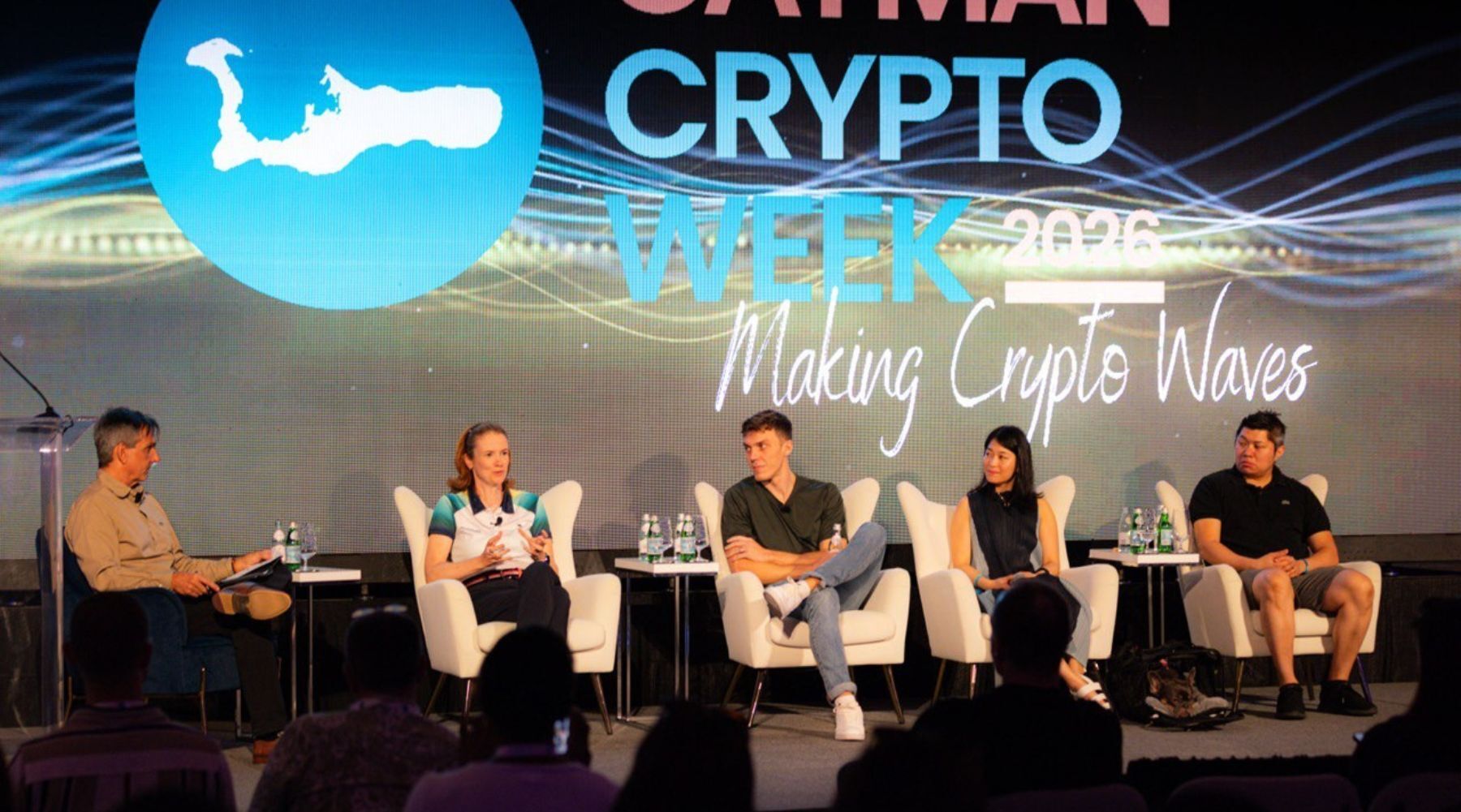
Industry commentary during Cayman Crypto Week (produced by the Blockchain Association of the Cayman Islands) further underscored Cayman’s continued development as a regional hub for digital asset activity and reinforced the value of an ecosystem where founders can engage directly with experienced advisors and peers.
For crypto and Web3 projects, this “relationship density”, across legal, regulatory, compliance, administration and corporate services, can translate into practical advantages: faster execution on structuring and operational build-out, more efficient fundraising readiness, and a clearer view of peer practices and market expectations. For businesses anticipating institutional capital or regulated counterparties, access to credible, experienced advisors is frequently a material factor in diligence and decision-making.
For Anna Muheim of ShoreLabs SEZC, the initial decision to explore Cayman was driven by client demand. What ultimately changed her perspective, however, was not only the structuring options, but the quality of the local network and the wider business community.
“By the end of our first day of meetings, we began to see Cayman not just as a structure solution, but as a place to build from. We came for education and discovered a place to build.” - Anna Muheim, CEO, ShoreLabs SEZC
As global expectations around governance and licensing continue to tighten, jurisdictions with established networks and credible service-provider depth may offer a meaningful execution advantage over time.
Frequently Asked Questions
Can a VASP-regulated company establish a Special Economic Zone company through Cayman Enterprise City?
Yes. A business that is (or will be) registered or licensed as a Virtual Asset Service Provider (VASP) can also establish a physical presence in Cayman through a Special Economic Zone Company (SEZC) via Cayman Enterprise City (CEC), provided it meets the relevant SEZ eligibility criteria and operating requirements. CEC supports establishing a local operational footprint (including premises, staffing pathways, community integration and practical set-up support) and offers substantial cost advantages compared with alternative establishment routes.
What does “substance” mean in practice for a tokenisation or crypto business operating from Cayman and can you outsource “substance”?
“Substance” is best understood as whether the business has real governance and operational control in Cayman that is consistent with its risk profile and the expectations of regulators, investors and counterparties. Certain functions can be outsourced to experienced service providers; however, accountability cannot be outsourced. Substance is assessed by reference to the total operating model, not simply an address. CEC can help establish a practical Cayman footprint; however, businesses should obtain advice from Cayman counsel to confirm the appropriate substance model for their activities and regulatory perimeter.
How should founders think about sequencing (entity set-up, SEZ presence, banking, and VASP applications)?
A common pitfall is progressing these workstreams independently and discovering late-stage misalignment. Sequencing is fact-specific, but many teams aim to align:
-
Structuring and governance (including board composition and policies)
-
Regulatory perimeter and compliance readiness (including AML/CFT programme, controls, procedures and resourcing)
-
Operational footprint (including SEZ presence where relevant)
- Regulatory submissions and counterparties (including banking and key vendors)
The right approach depends on whether the business is pre-product, scaling, or already live, and whether it requires registration or licensing under Cayman’s VASP regime.
How quickly can an SEZC be established through CEC, and what affects timing?
Many founders use the SEZ framework to establish an operational on-island presence efficiently. Timelines vary depending on the business activity, documentation readiness, staffing requirements and the relevant approvals. In practice, set-up is often achievable within approximately 4–6 weeks in straightforward cases but should be assessed on a case-by-case basis.
Is Cayman Enterprise City (CEC) and the SEZ framework a good fit for fund managers (including managers exploring tokenisation/RWAs)?
Often, yes – particularly where the manager requires a practical Cayman “on-the-ground” presence to support operations, governance, investor due diligence expectations, or a broader digital assets strategy.
-
Fund managers may consider the SEZ framework where they are:
-
establishing a Cayman-based management, advisory or operational team;
-
building out substance aligned to institutional diligence standards;
-
developing tokenisation initiatives (e.g., tokenised fund interests or RWA strategies) that benefit from proximity to Cayman-based service providers; and/or
- seeking a structured and efficient pathway to premises and operational set-up through CEC.
What is Cayman Enterprise City (CEC) and how does it differ from simply incorporating a Cayman company?
Cayman Enterprise City (CEC) is the operator of Cayman’s Special Economic Zone (SEZ) framework for eligible knowledge-based businesses designed to help entities establish a genuine operational presence in the Cayman Islands. CEC provides a structured pathway for physical office operations (including turn-key workspaces), Zone Trade Certificates, Zone Employment Certificates (work permits), set-up support, as well as integration into a broader business community and ecosystem.
What types of businesses are typically eligible to operate through CEC as an SEZC?
Eligibility is generally oriented toward knowledge- and technology-based activities (for example, fintech, digital assets, software, data, and other innovation-led business lines). The eligibility assessment is fact-specific and depends on the nature of the activity and the relevant SEZ category (e.g., Internet and Technology, Science and Innovation, Media, Commodities and Derivatives, Maritime and Aviation, and BlueTech). Learn more about CEC’s specialised industry hubs.
Does CEC help with the practical aspects of relocation and set-up?
CEC’s Global Mobility Team can assist with practical set-up planning for an SEZC presence, such as structuring a workable footprint, workspace options, and the operational steps typically involved in establishing a Cayman base. As with any jurisdiction, businesses should still obtain appropriate legal, regulatory, tax and immigration advice tailored to their facts.
Can I come visit and take a look at the Cayman Enterprise City facilities?
Absolutely. CEC’s Global Mobility Team can arrange a visit, including curated itineraries, access to community networking events, and introductions to preferred service providers where appropriate.
If you’re considering Cayman as a base, whether you’re relocating leadership, building a team, or establishing operational substance, CEC can help you evaluate practical set-up options through the Special Economic Zone (SEZ) framework. To discuss your circumstances and what a Cayman operating model could look like for your business, contact CEC’s Global Mobility Team.
This article is based on a founder-focused panel hosted by Cayman Enterprise City at Cayman Crypto Week, held at Hotel Indigo on 12 February 2026. The session, moderated by Charles Kirkconnell (CEO, Cayman Enterprise City), was titled: “Sand, Sea and Crypto – What Is It Like Relocating to the Cayman Islands as a Founder and Team?”
Disclaimer: This article is provided for general information purposes only and does not constitute legal, regulatory, tax or other professional advice. Specific advice should be obtained from suitably qualified advisors in light of your particular circumstances, business model and regulatory perimeter. No liability is accepted for reliance on the contents of this article.